PURITY
Carats count in 24ths
Pure gold is 24 carat. Pure gold is too soft for many uses, so it is mixed with other metals: 18 carat is 75% gold, 9 carat is 37.5%.
Pick a carat
 doodlegold
GOLD, THE ELEMENT
Au 79 soft, dense, unreactive
Gold is element 79, and it barely reacts with anything.
That is why old gold still gleams, why it ends up in phone connectors as well as rings, and why the number stamped inside a ring tells you so much. Here is gold the metal, from carats to hallmarks.
Updated
Read a caratTHE SHORT ANSWER
Three things make gold unusual.
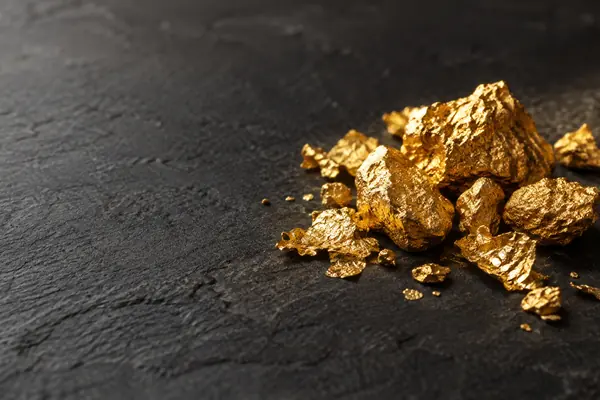
Each one shows up in everyday objects.
PURITY
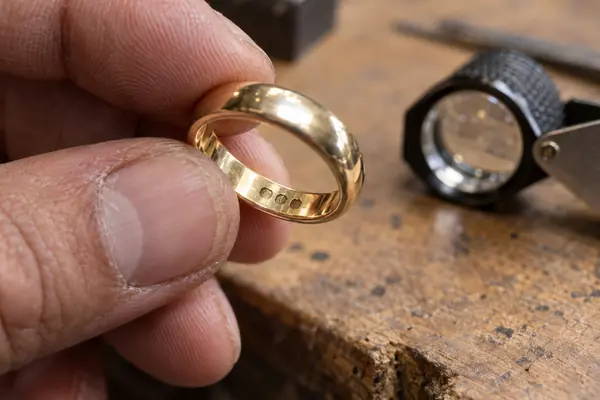
Pure gold is 24 carat. Pure gold is too soft for many uses, so it is mixed with other metals: 18 carat is 75% gold, 9 carat is 37.5%.
Pick a caratCHEMISTRY
Gold is chemically unreactive, which is why it is used for electrical contacts. It does dissolve in aqua regia, a mix of strong acids.
Why it is yellowSPREAD
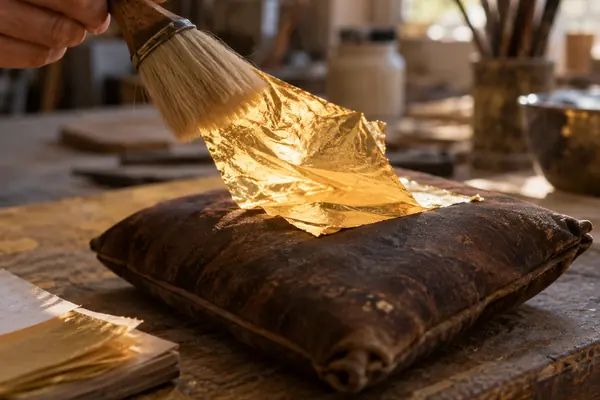
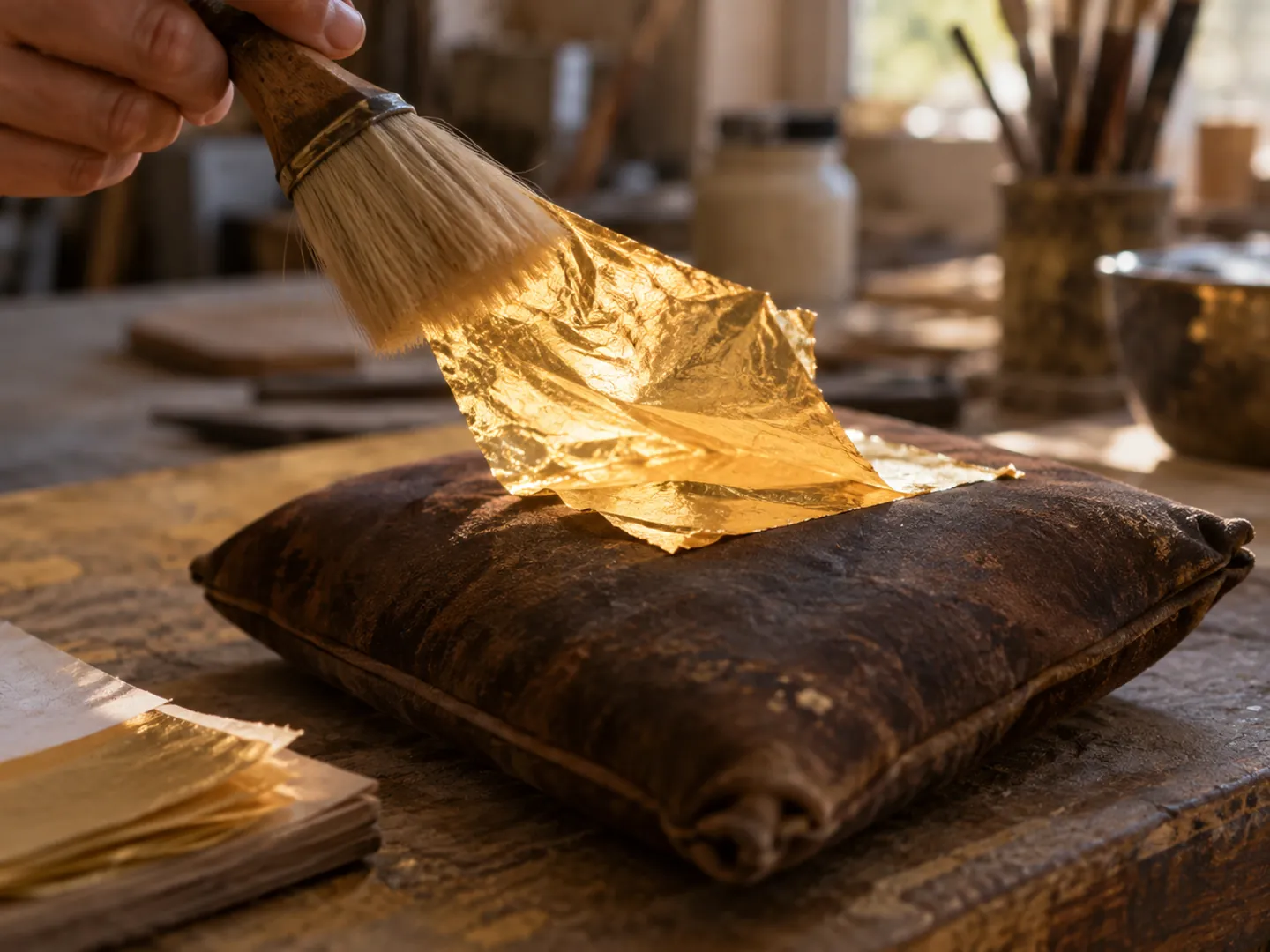
One gram can be beaten into a sheet of about a square metre, just 230 atoms thick, or drawn into about 165 metres of wire.
See the numbersREAD THE NUMBER
Pick a carat to see how much gold it contains and what a UK hallmark would show. The bar shows the share of gold.
Carat figures from The Royal Mint; hallmark standards from the UK Assay Offices' Hallmarking Guidance Notes (2022).
TWO NUMBERS WORTH KNOWING
One figure for the world's whole stock,
one for how far a single gram stretches.
≈ 222,600 tonnes
Gold mined throughout history
The World Gold Council puts the total at around 222,600 tonnes by mid-2026, about two-thirds of it mined since 1950. Together it would form a cube about 22.6 metres a side.
EVER MINED · WORLD GOLD COUNCIL
230 atoms
Thickness of 1 g beaten to 1 m²
The Royal Society of Chemistry says a gram of gold can be beaten into a square metre sheet just 230 atoms thick. Gold is also dense: 19.3 grams per cubic centimetre.
GOLD LEAF · ROYAL SOCIETY OF CHEMISTRY
The World Gold Council estimates that about 45% of all above-ground gold, roughly 99,700 tonnes, is held as jewellery, and about 18% by central banks.
READING A UK HALLMARK
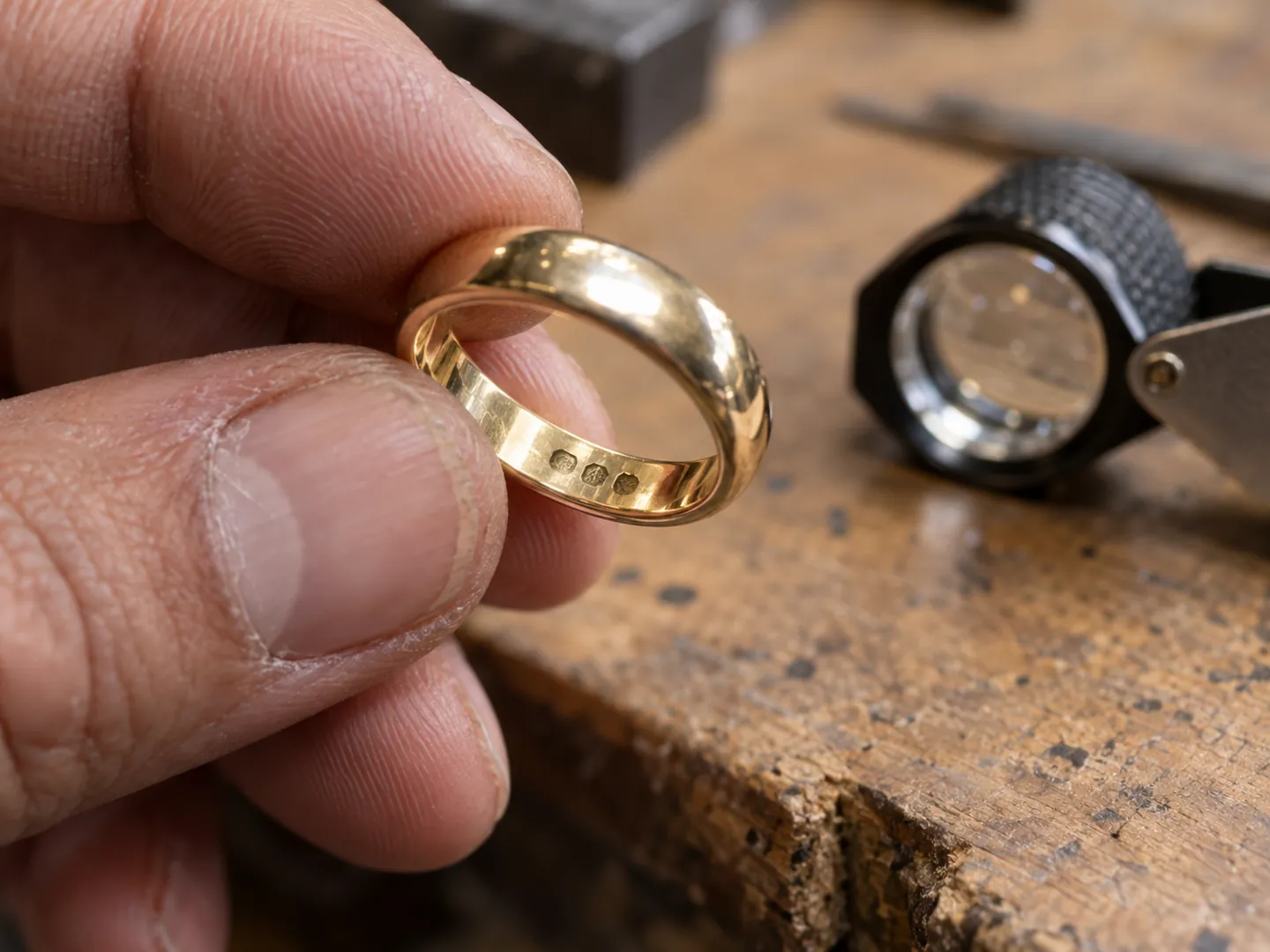
In the UK it is an offence to describe an item as gold unless it is hallmarked, with some exemptions. A full hallmark has three compulsory marks.
At least two letters inside a shaped surround. It identifies the maker or sponsor responsible for the item.
A number such as 375, 585, 750 or 916 gives the gold content in parts per thousand.
This shows which of the UK's four Assay Offices tested it: London, Birmingham, Sheffield or Edinburgh.
Gold items under 1.0 gram are exempt from compulsory hallmarking, so a tiny chain may have no mark.
WHY GOLD IS YELLOW
Gold's nucleus carries 79 positive charges, so its electrons move at speeds close to the speed of light. Chemists at Heidelberg University explain that this relativistic effect is stronger in gold than in any other stable element.
The effect shows up in the outermost electron shell, which controls colour. That is part of why gold looks yellow while its neighbour silver looks colourless, and why gold behaves more like copper than silver in some of its bonds.
Questions
Carat is a 24-part ratio, so 24 carat means all 24 parts are gold. The Royal Mint gives 22 carat as 91.7% gold, 18 carat as 75% and 9 carat as 37.5%.
Pure gold is too soft for many uses, so it is alloyed with other metals to make it more durable. The Royal Society of Chemistry says 18 and 9 carat are common for this reason.
Gold itself is chemically unreactive and does not corrode, according to the Royal Society of Chemistry. It can be dissolved by aqua regia, a mixture of strong acids.
Items described as gold must be hallmarked under the Hallmarking Act 1973, but gold items under 1.0 gram are exempt. There are also exemptions for some older items.
Around 222,600 tonnes, according to the World Gold Council's figures for mid-2026. About two-thirds of it has been mined since 1950.
Sources
ABOUT THIS NAME
doodlegold.com is part of the DoodleSale portfolio. It isn't in an auction right now, but you can ask about leasing it.